Regardless of what financial or estate planning strategy is considered, and whether the goal is to protect wealth from creditor claims, minimize income tax or reduce estate and gift tax, there is one factor that is the heart of the most successful outcomes. And that is the return on the investments or assets used in the strategy.
Take a goal of reducing estate and gift tax. Whether one considers just straight gifting, using the annual exclusion, gifting to use up the remaining lifetime gift tax exemption, making transfers through a grantor retained annuity trust (GRAT), or reducing gift or estate tax by creating a testamentary charitable lead trust described in Section 170(f)(2)(B), the key to success is the return on the assets involved.
Take, for example, a GRAT. Such a trust will be a successful estate planning strategy essentially only if the return is in excess of the Section 7520 rate used to value interests in the GRAT. (Actually, the arithmetic is a little more complicated than that.) Even if perfectly structured and administered, the trust will fail to achieve its goal if the investment return doesn’t exceed that rate.
Similarly, although often so-called Crummey Trusts are used to acquire and hold life insurance, more on average (depending on their return and on the timing of death) will be transferred using such a trust if securities are used to fund it rather than funding it with the insurance. Of course, if the ultimate goal is to have funds to provide liquidity at death (for example, to pay estate tax), funding the trust with life insurance may be necessary to achieve the goal.
Even if the goal is “mere” asset protection, transferring those assets more likely to appreciate more rapidly than others usually will provide the largest basket of protected assets.
Therefore, in guiding clients on how best to achieve their financial goals, determining which assets are likely to appreciate the most almost always is a critical factor. And of course, returns change over time. Who would have believed General Motors would go bankrupt or that buying crypto currencies could produce massive wealth is an extraordinary short period of time? And that means that having the flexibility to change investments with minimum cost and tax also needs to be considered. That will be addressed in a later post.
Generating strong returns is only half the equation!
The other half is making sure those assets are protected once they’re transferred.
NEW Exclusive Academy Masterclass – CLE Included!
“Trusts are the Answer, No Matter the Question”
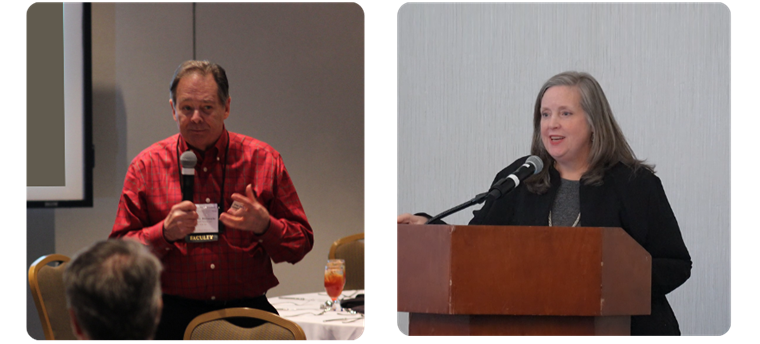
Join Jonathan G. Blattmachr, Esq. and Teresa L. Bush, Esq. on May 12 for a candid, expert-led conversation on why trusts should almost always be part of the plan — and how to make that case to clients who resist.
Spots are limited — secure yours before they’re gone.